

What did previous generations expect learning to look like?
A Speculative Design Proposal
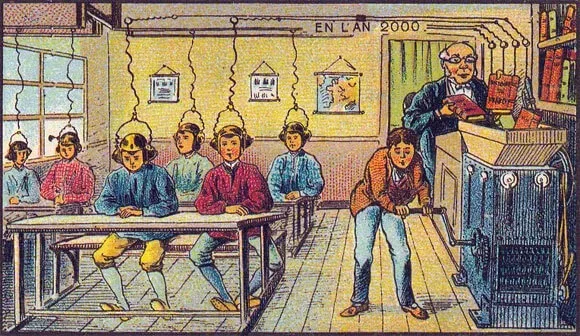
Kia ora Ako Ōtautahi whānau! At the heart of the Ako Ōtautahi is a belief that learning is a dynamic, lifelong process. Nowhere is this better explored than in an exciting, city-wide interactive experience, The Room of Futures Past, which transforms our city into hubs of memory, speculation, and intergenerational dialogue.
Here we outline a speculative design proposal that you’re more than welcome to iterate upon and make your own. Take a step with us into the ‘Room of Futures Past’.
This initiative is an immersive journey that compares the future previous generations imagined for Aotearoa New Zealand with the reality we inhabit today. It’s an invitation to pause and reflect on how technological promises, cultural shifts, and societal fears have continuously reshaped our expectations of education.
Let yourself be taken on a journey, exploring the pasts assumptions of the future within a learning context here in Aotearoa New Zealand.A Chronicle of Ambition: Aotearoa’s Evolving Learning Vision
The history of learning in Aotearoa is a mirror reflecting the country’s aspirations. By examining the visions of the past, we gain critical perspective on our present.
1960s: Seeds of Progress & the Post-War Imagination
Following the post-war boom, optimism was high. The focus was on progress and modernity, with education as the key to national prosperity. The future was imagined with students using personal computers and learning via distance learning through television. While idealistic, this era planted the first seeds of a more learner-centred approach, aspiring to an equitable and accessible system for all.
1970s: Bicultural Awakening & Holistic Learning
The Māori Renaissance fundamentally shifted the educational landscape. The idea of learning as a tool for cultural revitalisation, particularly for Te Reo Māori and tikanga Māori, became prominent. Concepts like "lifelong learning" gained popularity, and alternative models like the open classroom were explored, driven by a growing push for equity and social justice.
1980s: Digital Horizons & Market-Led Shifts
This decade introduced a paradox. Personal computers appeared in classrooms, promising a tech-literate generation. Simultaneously, the "Tomorrow’s Schools" reforms radically restructured governance, giving schools autonomy and positioning parents as consumers. The future of learning became heavily debated, balancing the promise of technology with the demands of economic productivity in a globalised world.
1990s: Internet Dreams & Personalised Learning
The arrival of the internet sparked tremendous educational speculation—children learning from home, connecting globally, and accessing vast knowledge libraries. There was a strong belief that technology would democratise education. This era reinforced constructivist ideas and the push for personalised learning paths while navigating the early anxieties of the digital divide.
2000s to 2010s: Collaboration, Diversity, & Indigenous Knowledge
The 2000s saw laptops and data projectors become standard, with the vision of "anywhere, anytime learning" becoming a reality. The 2010s solidified a commitment to collaboration, inquiry-based models, and a strong resurgence of mātauranga Māori and Pacific knowledge systems through initiatives like Ka Hikitia. The future was viewed as responsive, student-centred, and respectful of identity, language, and culture.
2020s: Futures Thinking & Planet-Centred Learning
The COVID-19 pandemic forced an unexpected, massive pivot to online learning, accelerating changes and raising urgent questions about equity and wellbeing. Today, the focus is on Futures Literacy—the ability to systematically think about multiple possible futures—and creating a system that is not only globally connected but also deeply rooted in the whenua and focused on planet-centred learning for a complex, volatile world.
The Empty Chair: Your Voice in the Conversation
The most interactive part of the ‘Room of Futures Past’ is The Empty Chair—a powerful catalyst for reflection and connection.
This simple, open invitation encourages attendees to sit down and engage in a meaningful, participant-led dialogue about learning and the future of our city. The option to record your conversation is available, and if you’d prefer to type/write then that’s option too!
The Empty Chair is a conversation piece, designed to capture:
Looking Back: What inventions were you sure would exist by now? Do you feel Ōtautahi Christchurch has become more of a Learning City than you expected?
Looking Forward: What do you imagine Christchurch will look like in 2050? If you could design the perfect city for learning, what would it have?
Connecting Generations: What lesson about learning should every generation pass down? What should older generations learn from younger generations?
Every story shared in The Empty Chair adds to a living archive—a collective narrative that will help shape how we think about the future of learning in our city. Depending on the locations capabilities these may be shared and displayed once recorded.
Would you sit and share your experience? Or would you ask the questions? The Empty Chair is waiting for your story.
Join the Journey: What would this look like in your Community?
The beauty of this event is its adaptability. Each space can host a tailored version, ensuring the experience reaches every part of our Learning Community. Here are some Ōtautahi specefic examples:
Tūranga Central Library has the potential to host large-scale, immersive projections.
Other spaces may feature hands-on future design projects.
Smaller suburban pop-ups could be time-capsule stations and intergenerational storytelling workshops.
By blending archival materials with multimedia and creating spaces for genuine dialogue, the ‘Room of Futures Past’ encourages critical reflection, inspires action, and fosters hope for the near future.
We’ve journeyed through decades of imagination—now it’s your turn. Share your expectations, your visions, your wild ideas. Tell us your expectations for the future of learning. Shape what’s next!