Co-Creating a Living Ecosystem of Stories: Rōpū Hui Series
The Storytelling Co-creation Rōpū, convened by Ako Ōtautahi Learning City Christchurch in partnership with Rātā Foundation, brings together storytellers, community leads, and practitioners to co-create a place-based community storytelling platform/learning hub for Ōtautahi. Grounded in equity, access, and innovation, the series followed an intentionally emergent process to transition Ako Ōtautahi from festival-based engagement (such as Remake Learning Days) toward a year-round, living learning ecosystem.
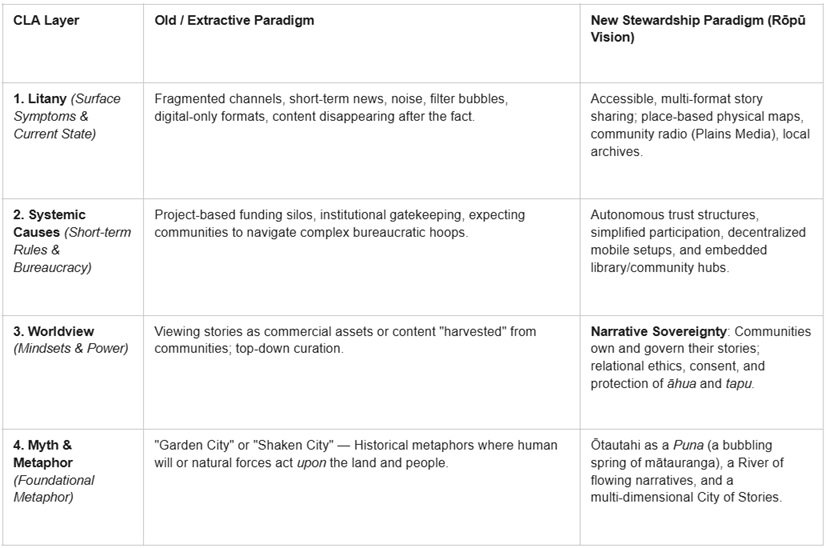
Across the first three strategic hui, the rōpū underwent a foundational paradigm shift: moving from "content creation" (building a transactional media product) to "stewarding a living ecosystem of stories", a model where storytelling is accessible, ethical, community-led, and deeply embedded in place.
Role of the Rōpū:
Act as a sense-making and stewardship body rather than just a content production team.
Focus on relationships, tikanga, and mapping narrative opportunities, recognizing that in the initial phase, network health and trust take precedence over raw output volume.
The Three Paradigm Shifts
Across the three gatherings, the rōpū shifted the narrative approach along three main axes:
Hui 1 from Content Production to Living Ecosystem Stewardship
Hui 2 from Digital hubs to place based and multiformat storytelling modes
Hui 3 from extractive curation to community narrative sovereignty
Hui #1: Laying the Foundations & Identifying Key Themes
Major barriers: cost, location, time, digital access, and institutional bureaucracy. Must be actively dismantled. Storytellers should be supported and empowered, not burdened by complex processes.
Multiple Storytelling Formats: Stories naturally take audio, visual, written, in-person, and place-based forms. Flexible, consent-based formats are essential for people who prefer not to be on camera or digitally visible.
Bringing Stories to People: Instead of expecting communities to navigate to a centralized digital portal, storytelling setups must go out into communities (e.g., mobile recording units, suburban hubs, printed/physical maps).
Partnership Over Reinvention: Leveraged existing regional channels, such as community radio (Plains Media), local libraries, and event networks, rather than building isolated technology from scratch.
Storytelling as Tapu, Ethics, Consent: Stories are relational and are often tapu (carry sacred weight). Tikanga must protect storyteller ownership, respect cultural boundaries, and prevent extractive or biased storytelling.
Audience Clarity is needed: Embrace an audience that spans time, place-based approach that prioritizes specific, historically under-seen groups (e.g., rangatahi, migrant whānau) alongside the wider public.
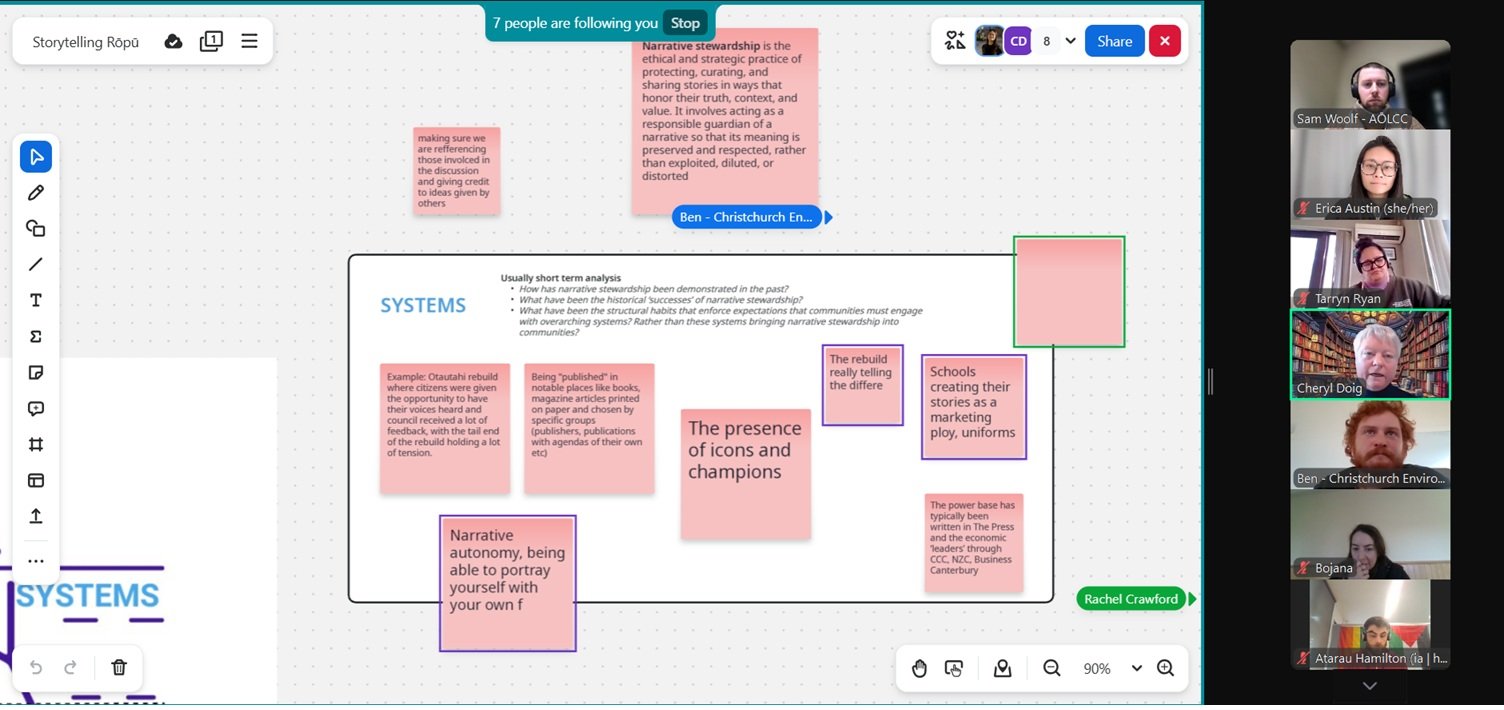
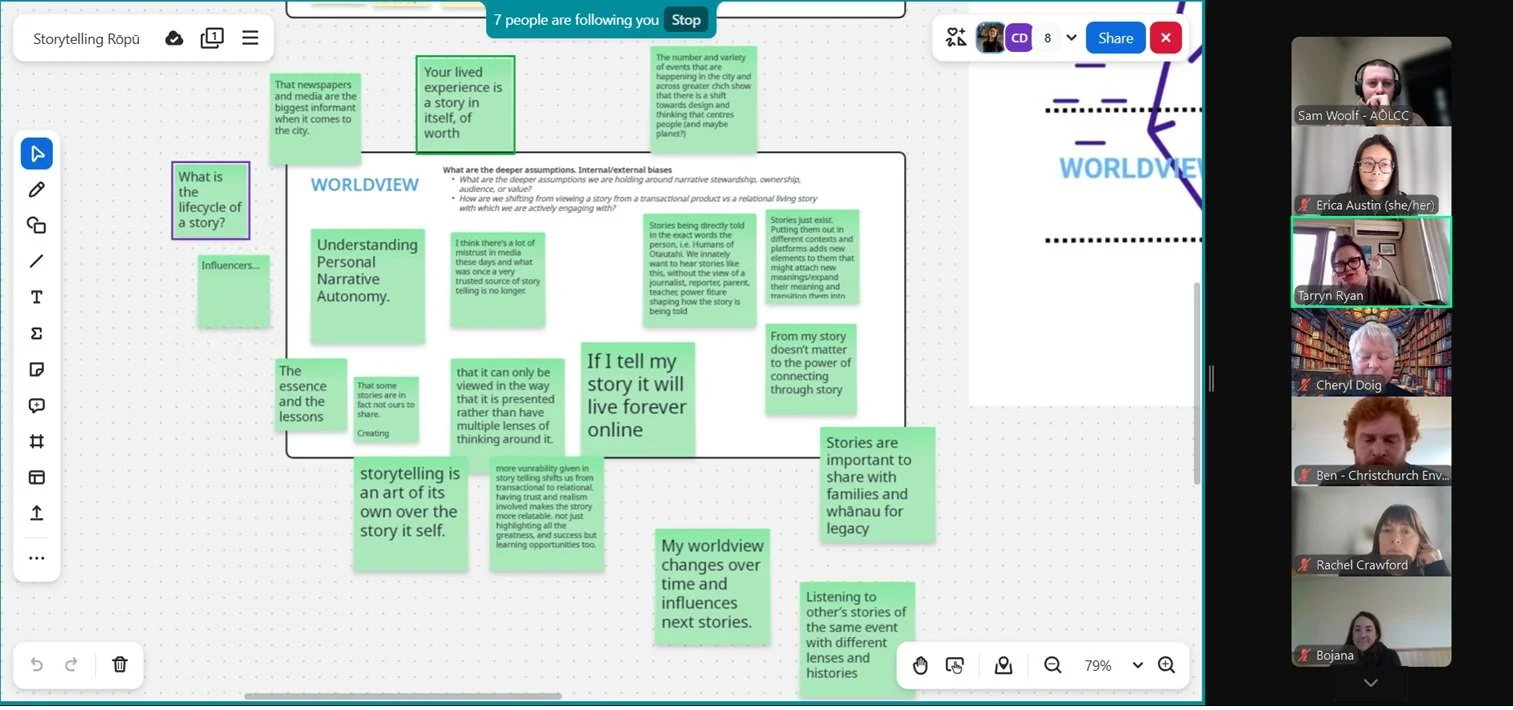
Hui #2: Defining Narrative Stewardship & Sovereignty
Navigating Mass Media & Mental Health: In an era of rapid social media consumption and dynamic news cycles, over-saturation can negatively impact community wellbeing. Stewardship requires intentional slowness, care, and mindful curation.
Intergenerational Knowledge Transfer: Participants highlighted a historical disconnect where younger generations were not always taught why practices existed (e.g., mindful living, honorable harvest, non-consumerism). Kaumātua and elders must be supported in opening knowledge channels safely.
Defining Narrative Sovereignty: Who holds power in shaping local narratives? Who leads current sovereignty models? Called for greater clarity on whose stories are protected and curated, requiring a broader representation across socioeconomic classes, life experiences, and ethnicities.
Institutional Integration & Trust Structures: Storytelling stewardship must establish autonomous, high-trust frameworks for community groups. Explored intertwining Ako Ōtautahi with existing community archives like Canterbury Stories, DiscoveryWall, and Humans of Christchurch Ōtautahi, CCC Archives, CCC Stories.
Intergenerational Mana (Futures Triangle Perspective): Recognized that the weights of the past are felt heavily in the present. Narrative sovereignty acts as a mechanism for reparations, healing, and undoing past narrative wrongs. It is time to build robust systems now to uphold the principle: Whakamana our tūpuna (ancestors), whakamana our mokopuna (future generations) - Tarryn Ryan.